Journal of Cardiovascular Medicine and Cardiology
Surgical Management of Embolised Occluding ASD Closure Devices and its Complications
1Senior Resident, MCh CVTS) Grant Medical College and Sir JJ Group of Hospitals, Mumbai, Maharashtra, India
2Associate Professor, MCh CVTS, DNB CVTS, FIACS, Grant Medical College and Sir JJ Group of Hospitals, Mumbai, Maharashtra, India
Author and article information
Cite this as
Sukharamwala R, Nagre SW. Surgical Management of Embolised Occluding ASD Closure Devices and its Complications. J Cardiovasc Med Cardiol. 2026;13(2):023-026. Available from: 10.17352/2455-2976.000239
Copyright License
© 2026 Sukharamwala R, et al. This is an open-access article distributed under the terms of the Creative Commons Attribution License, which permits unrestricted use, distribution, and reproduction in any medium, provided the original author and source are credited.Abstract
Introduction: It is a retrospective study of the surgical management of embolized occluding devices following transcatheter closure of ostium secundum atrial septal defects (ASDs) at a single center over a 10-year period from January 2016 to January 2026.
Materials and Method: Out of 231 patients who underwent percutaneous ASD closure, 46 (aged 6–44 years; 25 females, 21 males) experienced device embolization, detected primarily via post-procedure echocardiography, necessitating emergency surgical intervention. All procedures involved midline sternotomy under cardiopulmonary bypass for device retrieval and ASD closure, typically with a pericardial patch.
Device embolization sites included the right atrium (24 cases), right ventricle (12 cases), left atrium (8 cases), and pulmonary artery (2 cases), with associated complications such as pericardial tamponade (5 cases), femoral artery thrombosis (4 cases), and transient ischemic attack (1 case). Successful retrieval and defect closure were achieved in all patients. The mean ICU stay was 2 days, and the mean hospital stay was 7 days, indicating good postoperative recovery in uncomplicated cases.
Discussion: Percutaneous ASD closure offers significant benefits but carries a risk of embolization (up to 3.5% in literature), often requiring prompt surgical correction to mitigate life-threatening sequelae. Proper patient selection, device sizing, and operator experience are crucial to minimize such events, with surgical outcomes demonstrating low morbidity when addressed urgently. This study underscores the value of hybrid approaches in managing ASDs while highlighting the need for vigilant monitoring post-device deployment.
Conclusion: Device embolization following percutaneous ASD closure remains a serious but manageable complication. When embolization occurs, prompt surgical intervention with device retrieval and definitive closure of the septal defect yields favorable outcomes with acceptable morbidity and mortality rates. Meticulous patient selection, appropriate device sizing, and adherence to institutional protocols are essential to minimize the incidence of this complication. This 10-year experience demonstrates that a hybrid approach— combining the benefits of transcatheter technique with surgical expertise for complication management—provides the best outcomes for patients with complex ASDs.
Note - All necessary ethical approval and informed patient consent has been obtained for this study.
Abbreviation
ASD-Atrial septal defect, ICU – Intensive care unit, DVD patch – Double velour dacron patch, PAH – Pulmonary artery hypertension, RA – Right atrium, LA – Left atrium
Introduction
Atrial septal defect is usually an asymptomatic disease. However, children with atrial septal defects are at increased risk for several complications, such as endocarditis (if associated mitral valve insufficiency is present) and respiratory tract infections.
Any individual with an atrial level shunt is at risk for a paradoxical embolus from a venous thrombus, but in children, this is exceedingly rare, unless there is an underlying hypercoagulable state [1].
With the exception of ostium secundum types, atrial septal defects are structural defects that do not spontaneously close [2]. An ostium secundum atrial septal defect that measures 6 mm in diameter or smaller in the patient’s first year of life is likely to spontaneously close.
Definitive therapy for an atrial septal defect has historically been limited to surgical closure. However, with the advent of transcatheter techniques, many children undergo successful treatment in the cardiac catheterization laboratory [3]. Children with clinically significant and untreated atrial septal defects are at risk for various cardiac complications, including CHF, pulmonary hypertension, and arrhythmias. They are treated with diuretics, afterload reduction, and digoxin. Medical therapy is of no benefit in children with asymptomatic atrial septal defects (ASDs) [4].
Objective
To analyze the experience in surgical management of device embolization after trans-catheter closure of atrial septal defect [ASD] and its complications
Material and Methods
This study is a review of 46 patients out of the 231 patients who underwent transcatheter closure of ostium secundum ASD between January 2016 to January 2026 in whom the device embolized and surgery was required for its retrieval and ASD closure.
All the patients were in age group of 6 to 44 years with 26 females and 20 males. Majority of patients out of 46 were detected with device embolization on the same day of device closure of ASD in post-procedure 2D echo.
Emergency operation (Figures 1,2) was done in all cases via midline sternotomy.
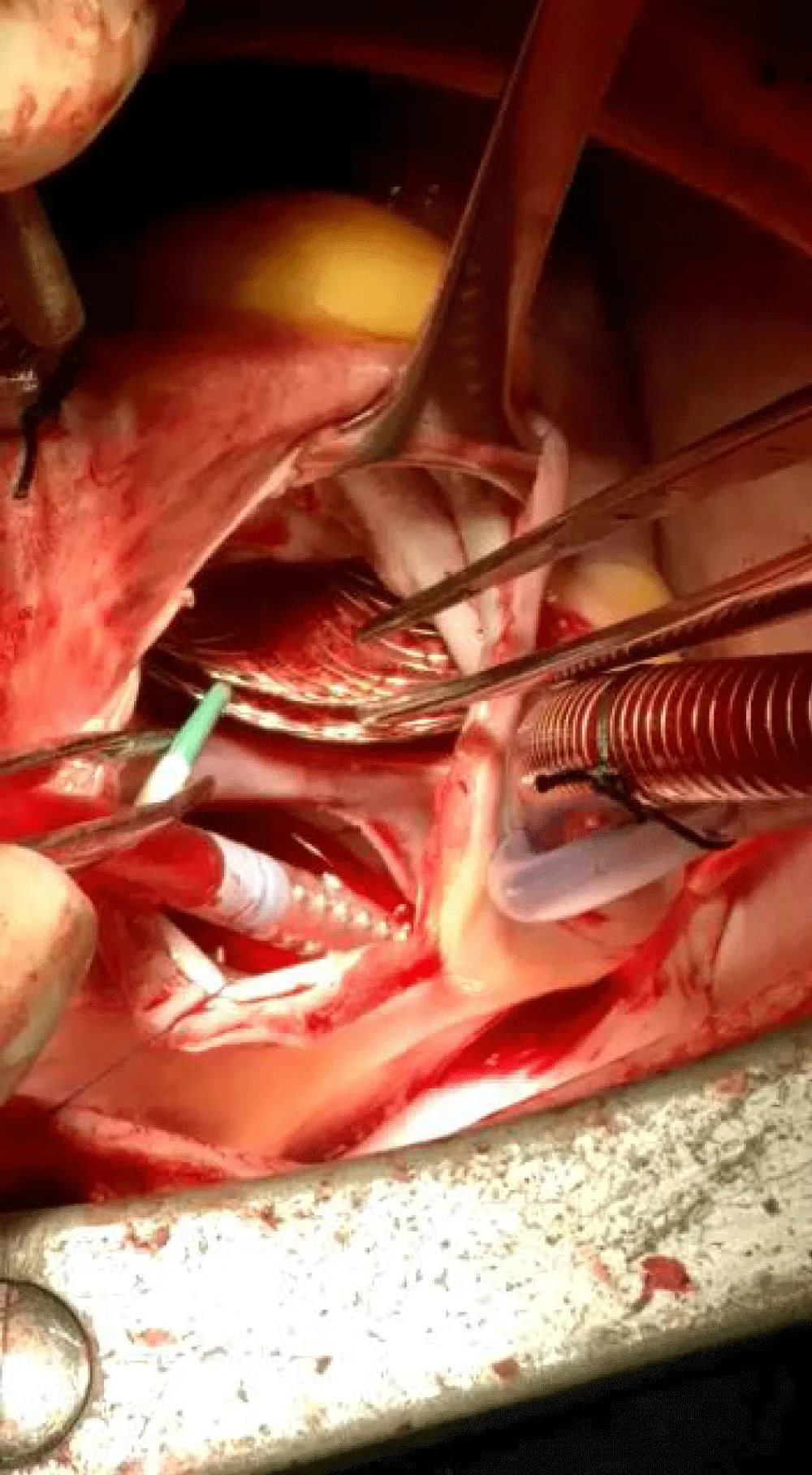
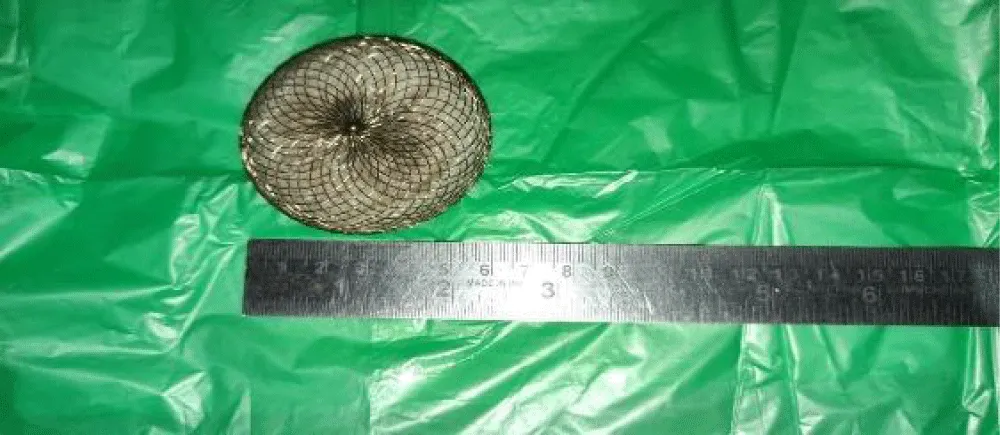
Under Cardiopulmonary bypass the device was retrieved followed by pericardial patch closure of ASD [Figures 3,4].
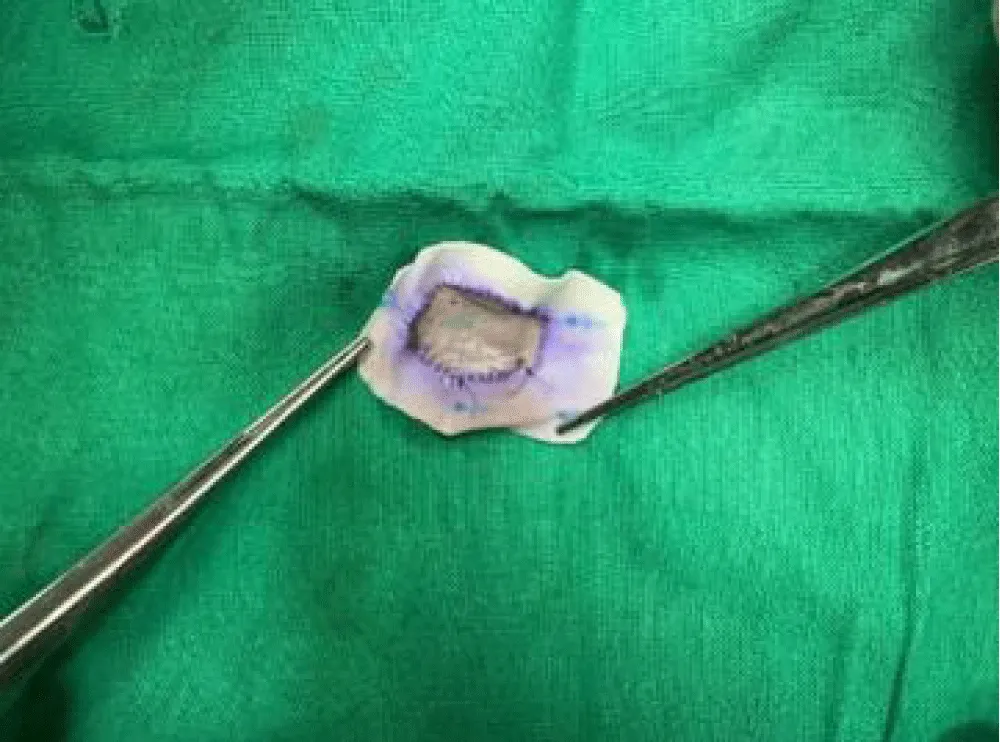
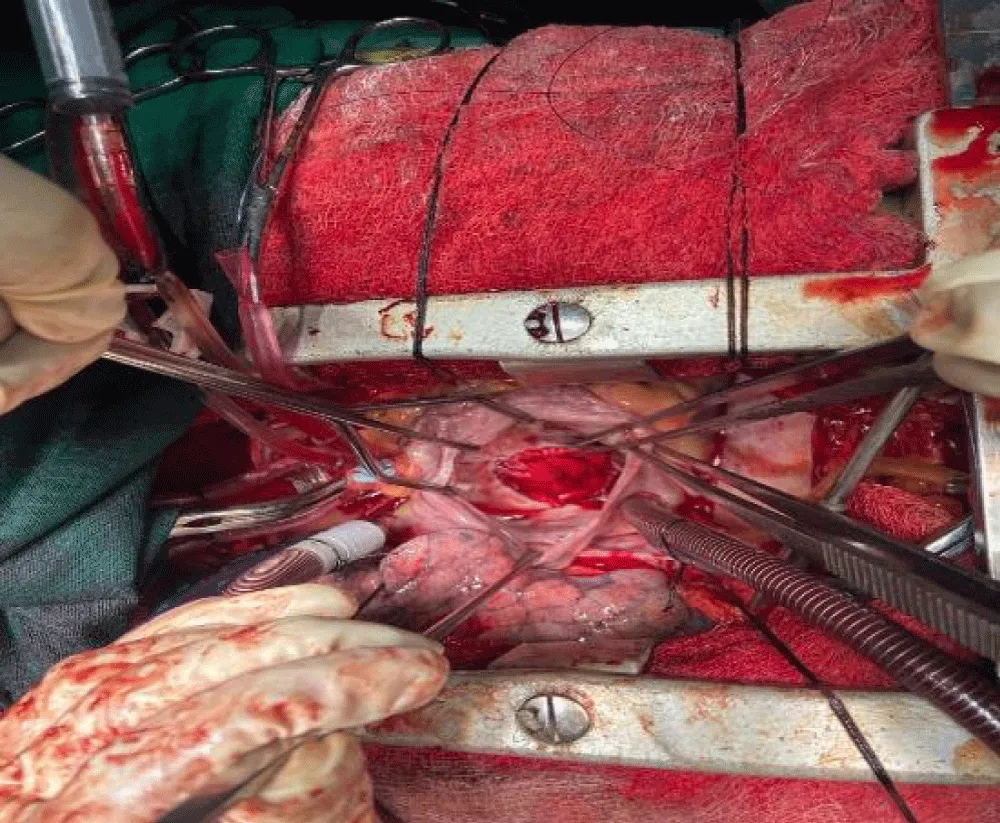
Results
Total 24 patients had device embolized in right atrium of which 10 were children under age of 17 years and 14 were adults. In 12 patients the device had embolized into the right ventricle, in 4 patients it was embolized into left atrium and in one patient it had embolized into left ventricle (Table 1).
In Complications five patients had pericardial tamponade, four patients Femoral artery thrombosis and one had transient ischemic attack in the post operative period due to paradoxical embolism (Table 2).
Discussion
Transcatheter approaches to atrial septal defect closure are well accepted in the pediatric population.
Various types of devices available but the maximum size available is less than 48 mm (Figure 5).
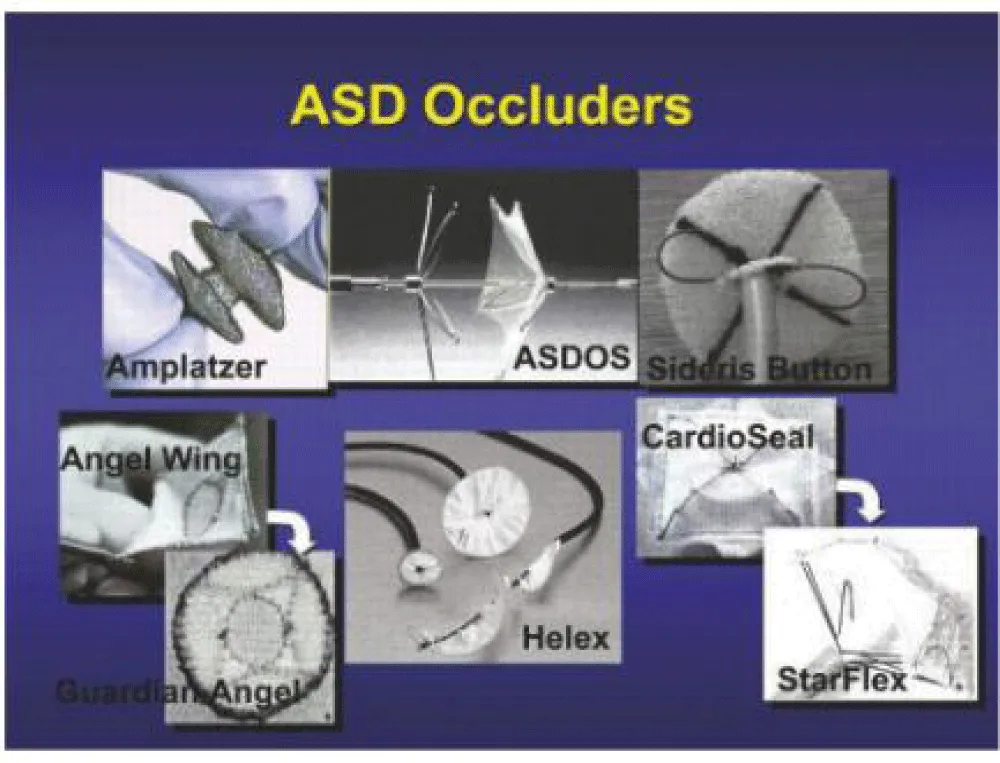
Secundum atrial septal defects are currently the only subtype of atrial septal defect that are amenable to this approach [4].
The preference for timing of catheter-based closure (Figure 6) is institution / interventionalist specific, but generally around age 4-6 years with a known, hemodynamically significant defect [5].
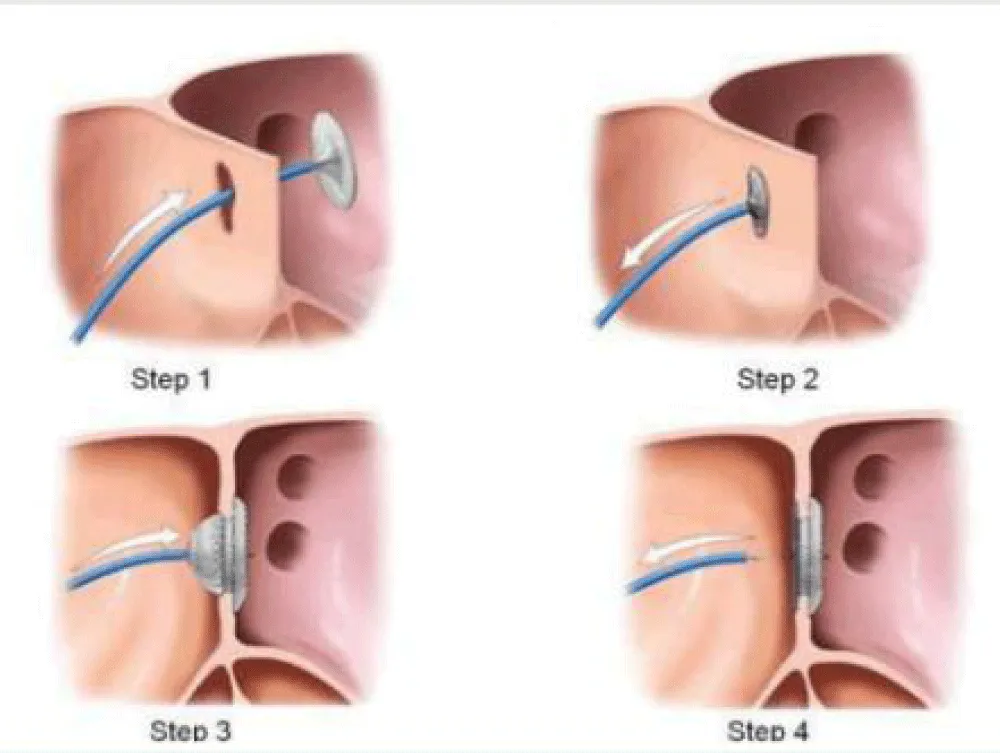
Potential drawbacks and concerns of the trans-catheter approach include residual shunting around the device, embolization during placement requiring surgical intervention, lack of adequate septal rims to properly seat the device, and the need for specific technical expertise and equipment [6,7].
Complications of percutaneous ASD closure are air embolism, vascular trauma resulting from large sheaths, device embolization, clot embolization through the aortic valve, occlusion of pulmonary or systemic venous return, perforation of the atrial septum, aortic perforation, infective endocarditis, atrial arrhythmia, device malposition necessitating removal, and delayed breakdown of the device [8,9].
Among these, device embolization is a potential life-threatening complication requiring immediate removal via percutaneous or surgical intervention [10]. Although the reported incidence is 0.01% to 0.55%, it would be higher in less-experienced operators. The most common surgical approach to the defect is primary repair with suture closure or with patch repair (generally with glutaraldehyde-treated autologous pericardium, Gore-Tex patch or fabric made of polyester fiber) (Figure 7).
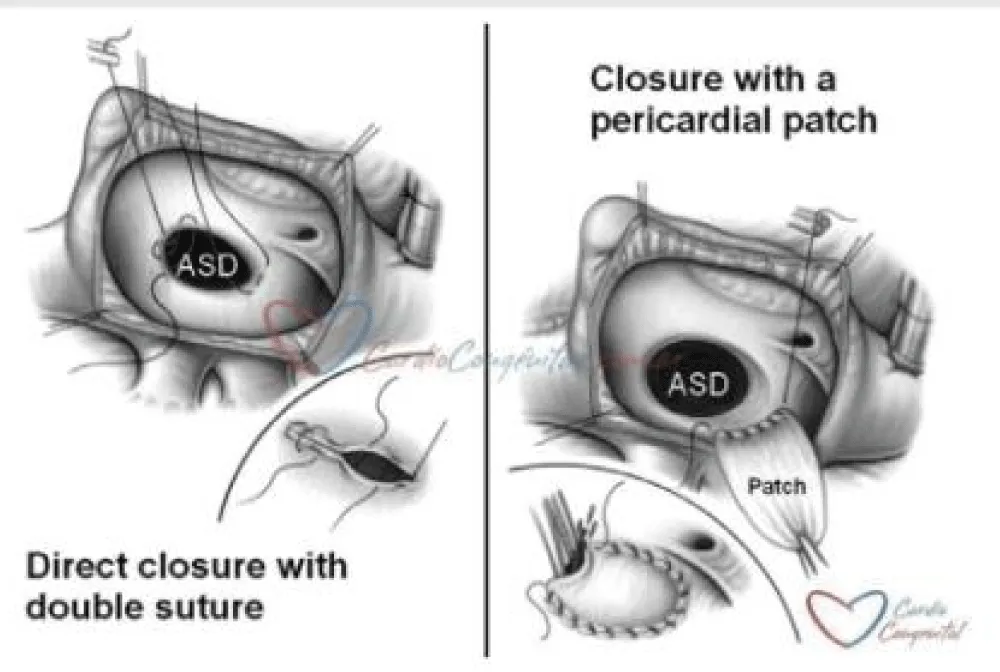
Candidates for surgery are children with clinically significant left-to-right shunting and whose defects are not amenable for device closure [11]. The prognosis for a child with an atrial septal defect is good; the rate of surgical mortality is less than 1% [12]. From our study, it looks that if proper guidelines for ASD device closure are followed, then its complications will be less.
Conclusion
Closure of ostium secundum atrial septal defects by percutaneous occlusive devices has significant advantages, device embolization continues to be a major complication with chances of added morbidity of vascular complications, stroke, and transient ischemic attacks. Patient selection is as important as device selection to prevent patient –device mismatch. After device embolization, the device can be retrieved, and the septal defect can still be closed surgically with good success and minimal morbidity if acted upon on an urgent basis.
References
- Gittenberger-de Groot AC, Moulaert AJ, Hitchcock JF. Histology of the persistent ductus arteriosus in cases of congenital rubella. 1980. Available from: https://doi.org/10.1161/01.cir.62.1.183
- Pegoli W. Pericardium and great vessels. In: Oldham KT, Colombiani PM, editors. Principles and Practice of Pediatric Surgery. 4th ed. Philadelphia (PA): Lippincott Williams & Wilkins; 2005. p. 1019. Available from: https://doi.org/10.1097/01.sla.0000208423.52007.38
- Nagre SW. Atrial septal defect: management approach in children. Ann Woman Child Health. 2016;2:3-4. Available from: https://goo.gl/p4XQ91
- Miao CY, Zuberbuhler JS, Zuberbuhler JR. Prevalence of congenital cardiac anomalies at high altitude. J Am Coll Cardiol. 1990;12:224-228. Available from: https://doi.org/10.1016/0735-1097(88)90378-6
- Nagre SW. Atrial septal defect – forgotten treatment guidelines. Acute Chronic Diss. 2017;1:e101. Available from: https://goo.gl/ydMSwu
- Nora JJ, Nora AH. Recurrence risks in children having one parent with a congenital heart disease. 1976. Available from: https://doi.org/10.1161/01.CIR.53.4.701
- Pezzati M, Vangi V, Biagiotti R, Bertini G, Cianciulli D, et al. Effects of indomethacin and ibuprofen on mesenteric and renal blood flow in preterm infants with patent ductus arteriosus. J Pediatr. 1999;135:733-738.
- Nagre SW. Surgical removal of embolised atrial septal defect device from pulmonary artery. J Thorac Cardiovasc Surg. 2015;150:e55-e57. Available from: https://goo.gl/xzHr7Js
- Hsiao JF, Hsu LA, Chang CJ, et al. Late migration of a Sideris septal occluder device for closure of atrial septal defect into the left atrium with mitral valve obstruction. Am J Cardiol. 2007;99:1479-1480. Available from: https://doi.org/10.1016/j.amjcard.2006.12.083
- Yared K, Baggish AL, Solis J, et al. Echocardiographic assessment of percutaneous patent foramen ovale and atrial septal defect closure complications. Circ Cardiovasc Imaging. 2009;2:141-149. Available from: https://doi.org/10.1161/circimaging.108.832436
- Divekar A, Gaamangwe T, Shaikh N, Raabe M, Ducas J. Cardiac perforation after device closure of atrial septal defects with the Amplatzer septal occluder. J Am Coll Cardiol. 2005;45:1213-1218. Available from: https://doi.org/10.1016/j.jacc.2004.12.072
- Krumsdorf U, Ostermayer S, Billinger K, et al. Incidence and clinical course of thrombus formation on atrial septal defect and patent foramen ovale closure devices in 1,000 consecutive patients. J Am Coll Cardiol. 2004;43:302-309. https://doi.org/10.1016/j.jacc.2003.10.030
Advertisement

 Save to Mendeley